Taking stock …

I have always been optimistic about the establishment and progress of the Sombrun Forest Garden Project, and I hope this has always been reflected in the tone of the Blog. In its own gentle way, the project continues to move forward. There have been three notable advances this year:

In six years, the original walnut tree that I inherited has gone from a weak specimen to a healthy vibrant tree. This is not down to external inputs other than the application of urine, but to a general improvement in soil health and unseen mycelial activity. Worm activity has also become remarkable around the tree, and they are literally ploughing up the ground! The garden has come to the aid of the tree. This year there was the biggest crop of nuts ever, and for the first time, they matured properly and fell out of their green casings to the ground. Until now it was the whole, slightly immature unit that fell, and the casing browned and hardened around the nut on the ground, encouraging mould and burrowing insects, making it hard to get at the actual nut. And this new development has in turn led to a far higher percentage of healthy edible flesh when shelled, so far I would put it at higher than 90%.

Continue reading
Fungi, tree maintenance and nutritious food …

The hügelkultur beds created earlier this year in the Upper Garden (Blog, April 15, 2023) haven’t had much of a mention since, mainly because they have been left to start their work. Apart from some marigold (Calendula officinalis), French marigold (Tagetes patula) and red amaranth (Amaranthus spp.), nothing has been planted in the beds, as I wanted the soil and organic matter to settle around the logs and branches in the bottom of the trenches. There were some butternut squash on two of the beds, but the seeds must have been in the compost I used, and they came up by themselves!

But the big news is that there is plenty of fungal activity! There are several species – as yet unidentified – (photos below), and there will no doubt be more. This is a key sign that the decomposition process of the wood at the base of the beds is well under way, and that they will soon be able to be planted. Shrubs and herbaceous plants with smaller root systems can go on the beds, but bigger shrubs and trees will go alongside so that their more extensive and larger roots will not be disturbed as the beds sink further. These will still benefit as much from the moisture and nutrition the beds provide – their roots will search it out.

Continue reading

The garden awakes …

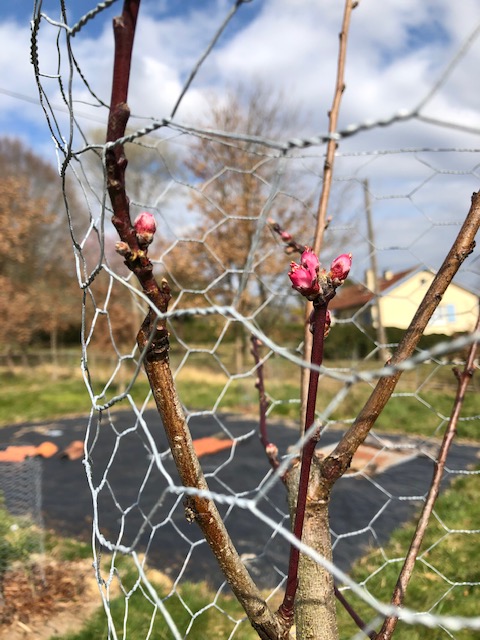
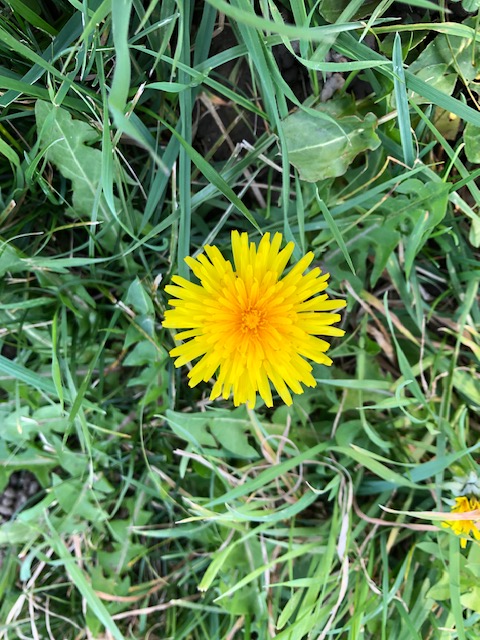
This month has seen a lot of new life – wild flowers returning, birds singing, trees budding and blossoming, grass growing, newly planted and other young trees and shrubs beginning to come into leaf.

Continue reading

More planting, hedge trimming and biomass …

Planting continued towards the end of the month (21st – 24th) with the addition of trees and shrubs both in the Lower Garden and in the Coppice. Four holly saplings that had been kept in pots for a couple of years and another small ash tree were put among the other trees in the Coppice, which now has a lot more diversity than the oak saplings, bramble and dog rose that were there when I arrived nearly four years ago. The holly is an understory tree in the forests around here and is a complement to the canopy oak, ash, hornbeam etc, and adds another piece to the ecosystem jigsaw.

The Lower Garden gained two sea buckthorn, an autumn olive and a Siberian pea tree (all nitrogen-fixing as well as providing edible fruit/pods), plus two small peach trees given by a friend and a couple of horseradish (to improve soil health and provide salad leaves, not to mention the pungent root of relish repute). I also planted a couple of grape vines (one white (Noah), one red (Maréchal Foch – a local lad), both ‘heirloom’ varieties), under two of the established fruit trees. These will use the tree as a support and grow up through the foliage to fruit in the sun. Much of the planting over the last couple of years has been focused on the Upper Garden, so these Lower Garden trees and bushes are making a real difference there.

Continue reading